1. Sliding Insect Screens and Their Everyday Benefits
Sliding insect screens are a practical and effective solution for homeowners who want to enjoy fresh air without inviting unwanted insects into their living spaces. Designed to fit sliding doors, windows, patios, and other openings, these screens provide a protective barrier against mosquitoes, flies, moths, and various other flying pests. Their simple operation and versatile designs make them a popular choice for modern homes, apartments, offices, and commercial properties. Unlike traditional insect protection methods, such as chemical sprays and plug-in repellents, sliding insect screens offer a physical barrier that works continuously whenever the screen is properly installed and closed. They allow natural ventilation while helping maintain a more comfortable indoor environment.
One of the main advantages of sliding insect screens is their ability to combine convenience with functionality. Conventional hinged screen doors require sufficient space to swing open and closed, which may not be practical in smaller rooms, narrow hallways, or areas with limited clearance. Sliding screens move horizontally along a track, making them particularly suitable for large glass doors and openings that connect indoor spaces with gardens, balconies, or patios. Their smooth movement makes daily use simple, while their unobtrusive appearance allows them to complement a wide range of architectural styles. Depending on the design, sliding insect screens can be installed as part of a new construction project or added to existing windows and doors. This flexibility makes them suitable for renovations as well as newly built properties.
Another important benefit is the improvement in indoor comfort. During warm weather, homeowners often want to open doors and windows to encourage airflow and reduce reliance on air conditioning. However, open windows can provide easy access for insects, making it difficult to enjoy natural ventilation. Sliding insect screens help address this challenge by allowing fresh air to enter while reducing the likelihood of pests coming indoors. They can also provide a convenient way to keep living areas connected to outdoor spaces without leaving entrances completely exposed. Although these screens do not eliminate every possible insect entry point, especially around damaged seals or uncovered openings, a correctly fitted screen can make a noticeable difference. By combining ventilation, accessibility, and practical pest protection, sliding insect screens contribute to a more pleasant and functional home environment.
2. Different Types of Sliding Insect Screens for Various Properties
Choosing the right sliding insect screen begins with understanding the available materials, frame designs, and mesh options. Aluminium-framed screens are a popular choice because aluminium is relatively lightweight, durable, and resistant to corrosion when appropriately finished and maintained. These frames are available in different colours and styles, making it easier to coordinate them with existing doors, windows, and exterior finishes. Aluminium screens are particularly useful in areas where the screen will be opened and closed frequently. Their sturdy construction can support regular use, although the quality of the frame, corner joints, rollers, and track system also influences long-term performance. A well-designed frame should move smoothly without excessive wobbling or sticking.
Fibreglass mesh is another common option for Fliegengitter zum Schieben. It is flexible, generally resistant to rust, and suitable for many residential applications. Fibreglass mesh can provide good visibility and airflow while helping prevent common flying insects from entering through open doors and windows. Polyester mesh is also available and may be selected for particular durability or design requirements. For households with pets, stronger pet-resistant mesh can offer additional protection against damage caused by scratching and pushing. However, even reinforced mesh is not completely resistant to tearing, so the intended use should be considered before choosing a product. Homeowners should compare mesh strength, visibility, ventilation, and cleaning requirements rather than selecting a screen based solely on its initial price.
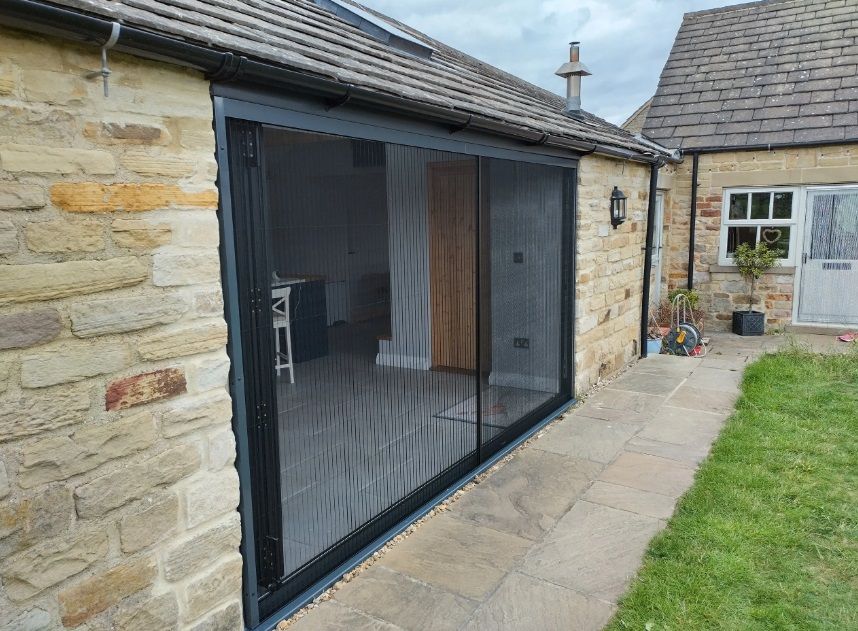
Some properties may benefit from specialised screen systems. Retractable sliding screens can move out of the way when they are not required, helping preserve unobstructed views and convenient access to outdoor areas. Pleated screen systems fold neatly to one side and may be suitable for wider openings, depending on the product design. Traditional sliding panels, by comparison, generally move along a fixed track and can be a straightforward choice for frequently used entrances. Fine-mesh options may help limit the entry of smaller insects, although a tighter weave can reduce airflow and visibility. The best solution depends on local insect conditions, the size of the opening, household needs, and the frequency of use. Before making a purchase, it is advisable to review the manufacturer’s specifications and confirm that the selected system is suitable for the intended door or window.
3. How Sliding Insect Screens Improve Ventilation and Home Comfort
Good ventilation plays an important role in maintaining a comfortable indoor environment. Opening windows and doors can help fresh air circulate through rooms, reduce stuffiness, and support the removal of everyday odours. Sliding insect screens make this process more practical by creating a barrier between the indoor environment and common flying pests. They are especially useful in kitchens, bedrooms, living rooms, and dining areas where homeowners may want regular airflow throughout the day. In homes with large sliding glass doors, a properly installed screen can make it easier to enjoy outdoor views and fresh breezes without leaving the entire opening unprotected. This combination of ventilation and insect control can be valuable in both warm climates and seasons when insects are especially active.
Natural airflow may also help homeowners manage their use of mechanical cooling systems. When outdoor conditions are suitable, opening screened doors and windows can help circulate air and reduce the need to run fans or air conditioning continuously. The actual energy savings depend on outdoor temperature, humidity, wind conditions, building insulation, and the home’s cooling system. Screens do not produce cooling themselves, but they make it more convenient to use natural ventilation when it is beneficial. During particularly hot or humid weather, keeping windows closed and using appropriate cooling equipment may provide greater comfort. Homeowners should also consider outdoor air quality, pollen levels, smoke, and other environmental conditions before opening windows. Insect screens are designed primarily to block insects and should not be assumed to filter fine dust, pollution, or airborne allergens unless a product is specifically designed and tested for those purposes.
Sliding insect screens can also improve the usability of transitional spaces between indoor and outdoor areas. A screened patio, balcony entrance, or garden-facing living room can feel more open while remaining protected against many flying insects. This is useful when entertaining guests, eating meals near an open doorway, or spending time with family during pleasant weather. Screens can help make outdoor-facing rooms more comfortable without relying entirely on insect repellents. However, effective protection requires attention to the complete opening. Gaps beneath doors, damaged mesh, loose corners, and poorly fitted frames may still allow insects to enter. Regularly checking the screen and keeping the surrounding area clean can improve performance. When properly selected and maintained, sliding insect screens provide a practical balance between outdoor access, indoor comfort, and everyday convenience.
4. Installation and Maintenance Tips for Long Lasting Performance
Correct installation is essential for getting the best results from sliding insect screens. The first step is to measure the opening accurately, including its width, height, and any variations in the frame. Measurements should account for the available track space, frame depth, and the type of sliding mechanism required. Even a small measurement error can cause problems, such as difficult movement, uneven positioning, or gaps around the edges. Homeowners purchasing ready-made screens should carefully compare the product dimensions with the manufacturer’s fitting instructions. Custom-made screens may be a better option for unusually sized doors, older properties, or openings that do not follow standard dimensions. If the existing door frame is damaged, uneven, or difficult to access, professional measurement and installation can help avoid unnecessary adjustments later.
During installation, the track should be clean, level, and free from obstructions that could interfere with the rollers. The screen panel must sit securely within the frame while remaining easy to move. Rollers that are incorrectly adjusted can cause the screen to drag, jump off the track, or become difficult to operate. The mesh should also be properly tensioned so that it remains secure without excessive sagging or distortion. After installation, the screen should be moved through its full range of motion several times to check for sticking, rattling, or gaps. Any locking mechanism, handle, or closing arrangement should function as intended. Although some simple systems are suitable for do-it-yourself installation, more complex sliding doors and retractable systems may require specialist tools or professional assistance.
Routine maintenance can significantly extend the useful life of sliding insect screens. Dust, leaves, pet hair, and other debris can accumulate in the tracks and prevent smooth movement. Cleaning the tracks periodically with a soft brush or vacuum cleaner can help remove these obstructions. The mesh can usually be cleaned gently using a soft cloth, a mild cleaning solution, and water, provided the manufacturer’s instructions permit it. Harsh chemicals, abrasive brushes, and excessive pressure should be avoided because they may damage the mesh, frame finish, or protective coating. Rollers and moving components should be inspected for wear, and any lubrication should follow the manufacturer’s recommendations. Homeowners should also check for loose fasteners, damaged corners, frayed mesh, and deteriorating seals. Repairing small problems early is often easier than replacing an entire screen after the damage becomes extensive.
5. Choosing the Best Sliding Insect Screens for Your Home
Selecting the best sliding insect screens requires balancing durability, appearance, functionality, and budget. Homeowners should begin by identifying where the screen will be installed and how frequently it will be used. A screen for a main patio entrance may need a stronger frame and more durable rollers than one fitted to a rarely opened window. Homes with children or pets may benefit from reinforced mesh, secure handles, and sturdy frame construction. Properties located in coastal or humid environments should consider materials and finishes suitable for those conditions. Aluminium frames with appropriate protective finishes can be a useful option, while mesh selection should reflect the local insect population and the desired balance between airflow and visibility. Comparing these requirements before shopping helps narrow the available options and reduces the likelihood of choosing a screen that does not suit the opening.
Price is another important consideration, but the cheapest product is not always the most economical over time. Low-cost screens may be suitable for occasional use, although weak rollers, poor frame construction, or easily damaged mesh can increase maintenance and replacement costs. Higher-quality systems may offer smoother movement, stronger components, better fitting options, and a longer service life. When comparing quotations, homeowners should consider the complete installation cost, including measurements, custom sizing, hardware, labour, and any required adjustments to existing frames. It is also useful to ask about replacement mesh, spare rollers, warranty coverage, and the availability of repair services. These details can make a meaningful difference if the screen experiences regular use or requires maintenance in the future.
Appearance and ease of use should also influence the final decision. Modern sliding insect screens are available in various frame colours and mesh styles, allowing homeowners to select options that blend with their windows, doors, and exterior finishes. A slim frame may create a more discreet appearance, while a robust design may be preferable where durability is the main concern. Before purchasing, test the sliding action whenever possible and check whether the screen can be removed for cleaning or repairs. Confirm that the selected model fits the opening correctly and that replacement components are readily available. It is also important to remember that insect screens are not automatically childproof, pet-proof, or fall-prevention barriers. They should never be treated as substitutes for suitable safety guards or secure door locks where these are required. By evaluating practical needs alongside construction quality and design, homeowners can choose a system that delivers reliable everyday performance.
Sliding insect screens offer a straightforward way to enjoy fresh air, maintain convenient access to outdoor areas, and reduce the entry of common insects. Their effectiveness depends on suitable materials, accurate measurements, proper installation, and regular maintenance. Whether installed on a bedroom window, a balcony entrance, or a large patio door, the right screen can support a more comfortable and functional living environment. Careful product selection helps homeowners find a solution that fits their property, suits their lifestyle, and provides lasting value.